07 Oct 2022

Skincare routine to manage hyperpigmentation in sensitive areas
You are not alone if you have dark patches on your skin. Reducing dark spots is one of the most sought-after skin treatments, as these stubborn patches hardly ever go away with basic lotions. It is no surprise that skin brightening has been one of the most searched beauty terms on Google. Some of you might find it extremely stressful to have hyperpigmentation, and it can even make you socially awkward. So let us unwind hyperpigmentation.
Hyperpigmentation is a condition that occurs when melanin accumulates in some regions of the skin due to multiple factors, such as injury, inflammation, acne, eczema, and ultraviolet (UV) exposure. However, if you specifically observe your skinfolds, armpits, neck, inner thighs, or groin to be dark and velvety, you probably have a condition called acanthosis nigricans (AN). A dermatologist can confirm it just by taking a look at your skin. It is said to be a dermal indication of some systemic disorders. Apart from these, recent studies have also shown friction and sweating to be associated with AN development.

Some of its common underlying disorders are shown in the figure given here.

PCOD: Polycystic ovarian disease
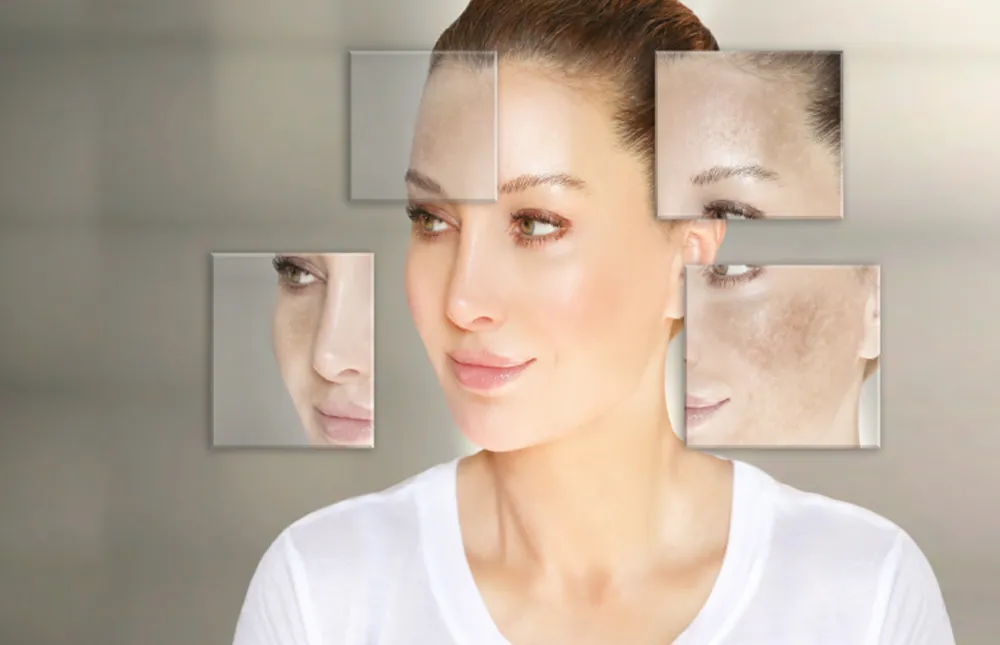
One of the other reasons why dark patches could appear on your face may be due to a condition called melasma. If you observe hyperpigmentation on your forehead, cheeks, or chin, you could blame it on melasma. Although its exact cause is unknown, the most widely accepted cause is UV exposure. Other possible factors include:

If you have been struggling with inflammatory skin conditions like acne, dermatitis, eczema or psoriasis, your skin is going to put up a fight against these conditions in the form of hyperpigmentation, commonly called as post-inflammatory hyperpigmentation (PIH).
This may result in uneven skin tone and dark patches. Even though the condition improves with time, it could take months or years to get better, warranting prolonged treatments. It can occur in any area of the body, but is mostly seen on the sun-exposed parts.

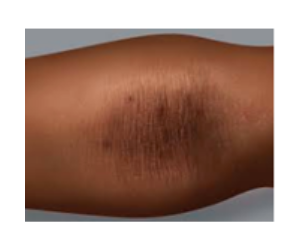
You might have tried hiding dark patches on arm folds with full-sleeved clothing, fancy scarves to cover your neck or layers of makeup, but all this masking gets frustrating in the long run and neglecting dark patches will only make matters worse. So how do you tackle this condition? Although there is no specific treatment for AN, a systematic approach can go a long way to overcome this problem. Read on to get started.
Managing hyperpigmentation
a. Say “No” to home remedies
As they say, “Your skin is a mirror of what is going on internally”. Thus, hyperpigmentation could be an indicator of a serious health issue. Instead of spending time researching hundreds of do-it-yourself (DIYs) and home remedies, schedule an appointment with your dermatologist.
b. Identify the root cause
If hyperpigmentation is due to an underlying condition, your doctor might prescribe you medications to keep your blood glucose under check and may advise you to maintain moderate weight. Depending on the cause, you might also be prescribed medicines to balance the hormones, or some medicine that you are on might be replaced with another drug that does not result in patches.10 Since there could be a lot to discuss in a short span, prepare for your appointment in advance. It is a great idea to have these pointers ready: Family history of diabetes, hypo- or hyperthyroidism, medications or supplements you take regularly, etc.
c. Look out for these ingredients in the formulations targeting sensitive areas
1. Lime PearlTM
It is the Australian caviar lime extract and is loaded with alpha-hydroxy acids (AHAs). AHAs are often used in most cosmetic products as they smoothen fine lines, improve skin texture, and in general enhance the overall skin condition. With a new mechanism for the exfoliation process, Lime PearlTM accelerates skin peeling and leaves the skin softer with a brighter, more radiant look.
2. Rumex occidentalis
A natural brightener, Rumex occidentalis inhibits the enzyme tyrosine kinase activity and prevents melanin synthesis.13 It brightens and evens out the skin tone and reduces pigmentation and redness.
3. β-WhiteTM
β-WhiteTM is a transforming growth factor (TGF)-ß biomimetic peptide and hence gives a brightening effect by inhibiting key enzymes involved in pigmentation.
4. Tasmannia lanceolata
Tasmannia lanceolata, commonly known as Tasmanian pepper, has long been used to treat skin disorders. It is an exceptionally rich source of antioxidants, vitamins, minerals, and essential oils.16 What could be a better combination to soothe your skin a little?
d. Understand your treatment options
Depending on the root cause and the type of condition, your doctor may advise different treatment plans. At times, your dermatologist might also suggest you to opt for laser treatment for specific conditions like AN and PIH.
e. Stay active
Exercise works wonders for the health and skin. Don’t worry, you don’t have to start running marathons, but anything that raises your heartbeat for a good 30 minutes would work – jog, walk, dance, or hit the gym. Your body will thank you later. Insulin sensitivity increases with weight loss and exercise, resulting in improvement in
obesity-associated skin conditions.
f. Healthy, wholesome diet for the win!
Consume perfectly portioned meals having a healthy balance of vegetables, protein, and carbohydrates.
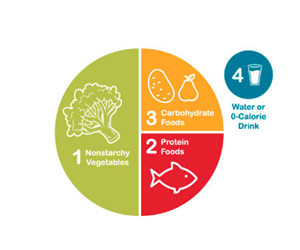
Non-starchy vegetables such as cauliflower, broccoli, eggplant, beans, okra, peppers, etc. are high in fiber and lower in carbohydrates, making them an important part of a healthy diet. Lean protein sources such as egg, chicken, cheese, and cottage cheese are healthier protein choices since these are lower in saturated fats. Limit carbohydrate portions like dairy products, rice, beans, and legumes, to one-quarter of your plate.
You simply cannot turn a blind eye to hyperpigmentation in specific areas because it is more than just black skin patches. Schedule an appointment with your dermatologist today, get your workouts in, and try to have balanced meals. Besides this, you could also get your hands on formulations specifically targeting sensitive areas and follow a proper routine to keep your skin healthy.
References
1. Nautiyal, A, Wairkar, S. Management of hyperpigmentation: Current treatments and emerging therapies. Pigment Cell Melanoma Res. 2021;34:1000-14.
2. Das A, Datta D, Kassir M, et al. Acanthosis nigricans: A review. J Cosmetic Dematol. 2020;19(8):1857-65.
3. Popa ML, Popa AC, Tanase C, et al. Acanthosis nigricans: To be or not to be afraid. Oncol Lett. 2019;17(5):4133-38.
4. Phiske MM. An approach to acanthosis nigricans. Indian Dermatol Online J. 2014;5(3):239-49.
5. Melasma and post inflammatory hyperpigmentation: Management update and expert opinion [Internet]. 2022 [cited 2022 Jul 29]. Available from:
https://www.skintherapyletter.com/melasma/melasma-post-inflammatory-hyperpigmentation-treatment/
6. Shenoy A, Madan R. Post-inflammatory hyperpigmentation: A review of treatment strategies. J Drugs Dermatol. 2020;19(8):763-68.
7. Post-inflammatory hyperpigmentation: A review of treatment strategies [Internet]. 2022 [cited 2022 Jul 29]. Available from: https://jddonline.com/articles/post-inflammatory-hyperpigmentation-a-review-of-treatment-strategies-S1545961620P0763X/
8. Lawrence E, Al Aboud KM. Post-inflammatory hyperpigmentation. [Updated 2022 May 30]. In: StatPearls [Internet]. Treasure Island (FL): StatPearls Publishing; 2022. Available from: https://www.ncbi.nlm.nih.gov/books/NBK559150/
9. Roggenkamp D, Dlova N, Mann T, et al. Effective reduction of post-inflammatory hyperpigmentation with the tyrosinase inhibitor isobutylamido-thiazolyl-resorcinol (Thiamidol). Int J Cosmet Sci. 2021;43(3):292-301.
10. Acathosis nigricans [Internet]. [cited 2022 Jul 22]. Available from: https://www.nhs.uk/conditions/acanthosis-nigricans/
11. Cosmetics alpha hydroxy acids [Internet]. [cited 2022 Jul 22]. Available from: https://www.fda.gov/cosmetics/cosmetic-ingredients/alpha-hydroxy-acids
12. Assets.website-files.com. [Internet] [cited 2022 Jul 22]. Available from: https://assets.website-files.com/5c719a126e5e680fcceb6aa4/5c7f0881995085788f8cbc66_Lime%20Pearl%20-%20Presentation.pdf
13. Treatment of melasma with a depigmentation cream determined with colorimetry [Internet]. [cited 2022 Jul 22]. Available from: https://www.tandfonline.com/doi/citedby/10.3109/14764172.2011.606463?scroll=top&needAccess=true
14. Fisk WA, Agbai O, Lev-Tov HA, et al. The use of botanically derived agents for hyperpigmentation: A systematic review. J Am Acad Dermatol. 2014;70(2):352-65.
15. Ebanks JP, Wickett RR, Boissy RE. Mechanisms regulating skin pigmentation: The rise and fall of complexion coloration. Int J Mol Sci. 2009;10(9):4066-87.
16. Cock IE. The phytochemistry and chemotherapeutic potential of Tasmannia lanceolata (Tasmanian pepper): A review. Pharmacognosy Communications. 2013;3(4):13-25.
17. What is the diabetes plate method? [Internet]. [cited 2022 Jul 22]. Available from: https://www.diabetesfoodhub.org/articles/what-is-the-diabetes-plate-method.html
Related blogs
Lorem ipsum dolor sit amet, consetetur sadipscing elitr, sed diam nonumy eirmod tempor invidunt ut labore et dolore magna...