07 Oct 2022

A hunt for cosmetic procedures for skin brightening
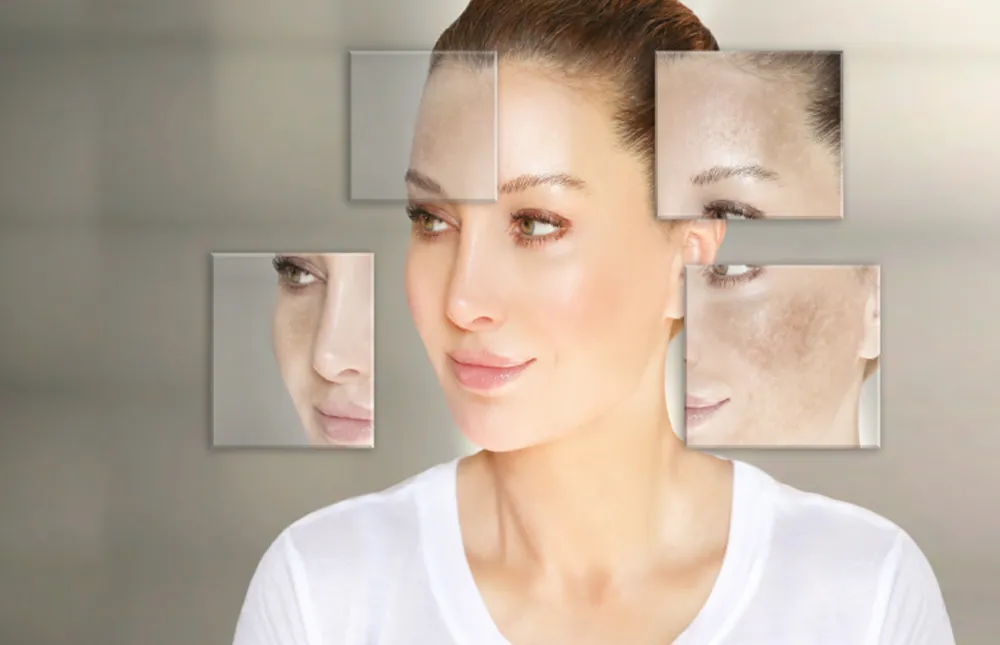
All women, irrespective of their age or ethnicity, want even, clear, and radiant skin. For most of them, the challenge to achieving the desired skin begins with dark spots or hyperpigmentation. Dark, dull, or pigmented skin can be caused by a lot of factors such as pollution, overexposure to sunlight, poor lifestyle choices, some medical conditions, or even stress. Skin brightening is about increasing the radiance, lightening the dark areas of the skin, and restoring skin vibrancy.1 Here, we share a guide to various available options for skin brightening. So, let’s get started!
Facial hyperpigmentation remains one of the most common reasons for which women look for cosmetic treatments. Nowadays, women are increasingly aware of the role chronic ultraviolet light exposure plays in photoaging. There are several treatment options available to reverse this process. Although facial hyperpigmentation has multiple causes, the underlying pathogenesis is the same, namely increased deposition of melanin in the skin layer. Depigmenting agents are therefore the most prescribed medications for facial hyperpigmentation.
Let us now move toward discussing different types of cosmetic procedures for skin brightening. The table given here presents various primary and secondary treatment options for skin brightening.

Brightening agents
Topical brightening products play a crucial role in achieving the reduction in skin hyperpigmentation. These products are composed of natural or synthetic bleaching components which mainly control the activity of melanin and help reduce hyperpigmentation. These topical agents are commonly used to achieve optimal results after prolonged application. Examples of commonly used brightening agents are hydroquinone, kojic acid, licorice extract, arbutin, ascorbic acid, glycolic acid, niacinamide, azelaic acid, retinoids, and others.

Chemical peels
Chemical peeling is another popular option for the treatment of superficial hyperpigmentation. There are a variety of chemical peels available that produce variable effects on the skin. Uneven skin pigmentation that is not treated effectively by surgical procedures can be treated with chemical peels. In chemical peeling, specific acids are applied to the skin layer that reveals smoother skin and reduces skin pigmentation. Different solutions are used to treat different skin injuries, which remove the damaged skin with pigmentation.4
Women opting for chemical peel treatment should be adequately prepared. Gentle face washing is required before a superficial chemical peel. In case of medium peels, residual oils, make-up, and debris must be removed thoroughly before applying chemical peel solutions. The following are some chemical peeling solutions used for treating skin hyperpigmentation:4
• Glycolic acid at 20–70%
• Salicylic acid at 20–30%
• Blue peel

KTP:YAG: Potassium titanyl phosphate-doped yttrium aluminum garnet; Nd:YAG: Neodymium-doped yttrium aluminum garnet.
Laser
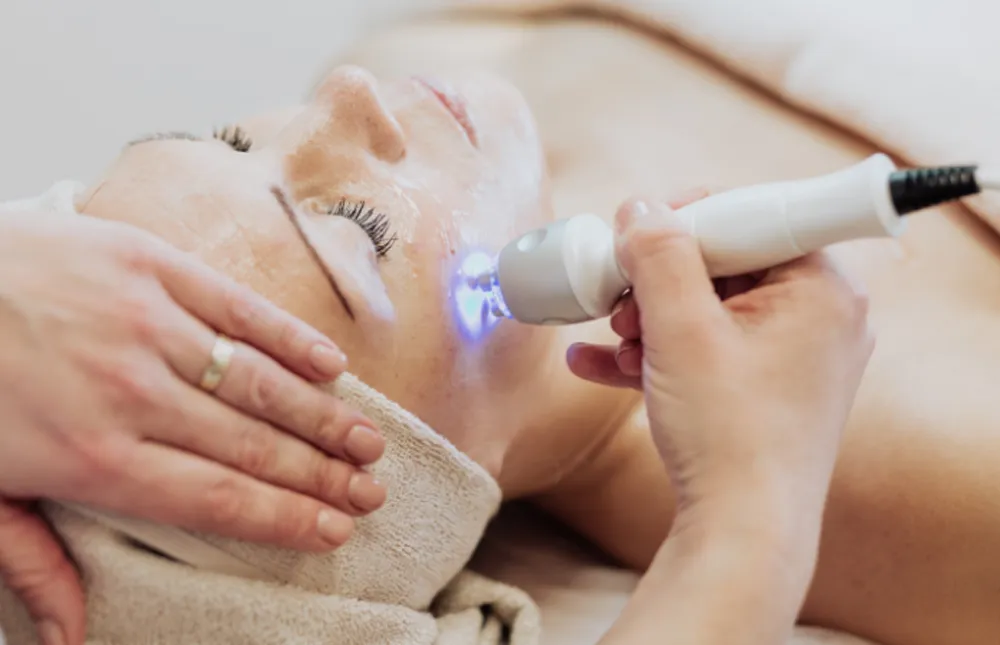
Laser treatment removes age spots and photodamaged skin. There are specific lasers for pigmented skin lesions such as lasers with blue, green, red, and near-infrared wavelengths. The table given describes various laser systems used to treat skin hyperpigmentation. However, these laser treatments should be applied with caution as they may lead to some serious side-effects following treatment. Proper and prior information should be given to the patients.
Moisturizers for maintenance
Chemical peeling
After a chemical peeling, the skin may become dry and sensitive. Thus, moisturizing the skin with a neutral, unscented cream or lotion becomes important. Moisturizers can minimize itchiness and irritationand speed up the recovery. Moisturizers should be applied gently, as scrubbing or rubbing may increase irritation and lead to other damage. Also, applying too much moisturizer can disturb the actual peeling process.
Laser treatment
After laser treatment, the skin may come in contact with anything that may irritate an already sensitive complexion. So, in such cases, slathering a moisturizer on the inflamed skin may make the healing process easy. Keeping the skin hydrated afte the procedure is the key to a successful recovery, but a moisturizer containing strong acids or chemicals may worsen the process. Thus, considering a moisturizer having petrolatum, vitamin E oil, antioxidants, hyaluronic acid, ceramides, lanolin, and aloe is essential, which prevents water loss.
References
1. Skin lightening cosmetic procedures [Internet]. [cited 2022 Jul 24]. Available from: https://www.nhs.uk/conditions/cosmetic-procedures/skin-lightening/#:~:text=Skin%20lightening%2C%20or%20skin%20bleaching,and%20dark%20patches%20(melasma)
2. Kassim AT, Hussain M, Goldberg DJ. Open-label evaluation of the skin-brightening efficacy of a skin-brightening system using decapeptide-12. J Cosmet Laser Ther. 2012;14(2):117-21.
3. Desai SR. Hyperpigmentation therapy: A review. J Clin Aesthet Dermatol. 2014;7(8):13.
4. Khoo YT, Halim AS. Treatment modalities for hyperpigmented skin lesions: A brief overview.
J Surg Dermatol. 2016;1(2):71-79.
5. How to take care of skin after a chemical peel [Internet]. [cited 2022 Jul 25]. Available from: http://www.rejeuvine.com/how-to-care-for-skin-after-a-chemical-peel/
6. Moisturizers for post-procedure skin [Internet]. [cited 2022 Jul 25]. Available from: https://www.realself.com/news/soothing-moisturizers-for-post-procedure-skin-according-to-doctors
Related blogs
Lorem ipsum dolor sit amet, consetetur sadipscing elitr, sed diam nonumy eirmod tempor invidunt ut labore et dolore magna...