13 Oct 2022

The circadian rhythm and your skin
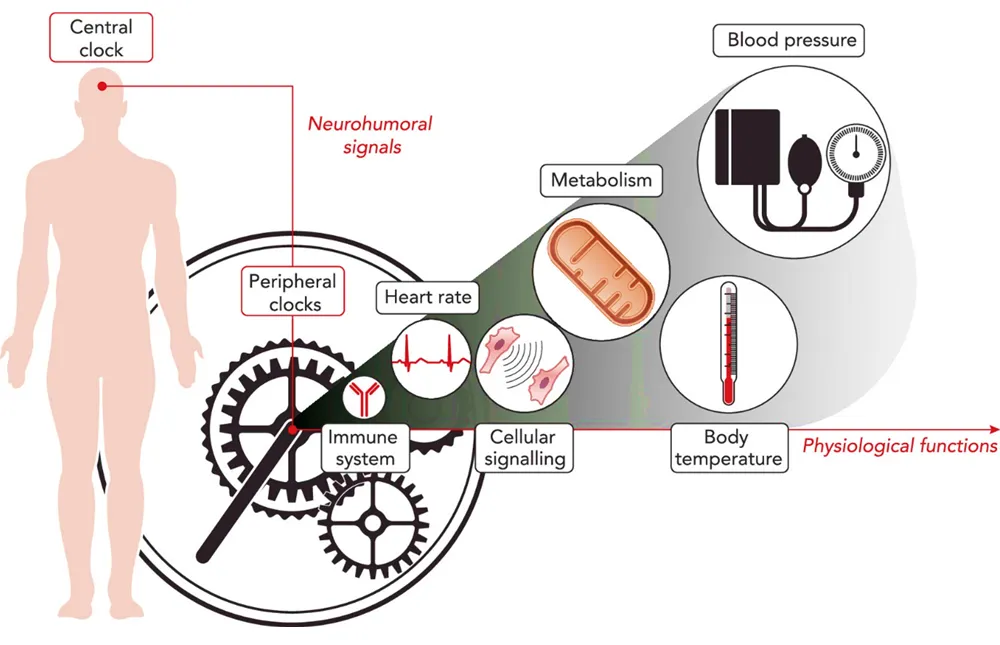
A circadian system or the body clock is responsible for controlling biological processes on a nearly 24-hour basis. The evolutionary-conserved process regulates the sleep-wake cycle as well as molecular and cellular operations. It controls the body's diverse functions during the day and night, and they modulate genes that affect skin stem cell metabolism, proliferation, DNA repair, stimulus response, and immunity as given in the figure.1–3
Know the functions of your skin
Skin is the largest organ of our body and the first line of defense against environmental contaminants, such as toxins, microorganisms, and radiation. The skin plays a critical role in maintaining the homeostasis of the body through fat storage and hormone production. To adapt to its environment, the skin must interact with external stimuli.3 As the skin's primary function during the day is to protect, it is at night that its primarily concerned with repairing any harm caused during the day. Circadian rhythms are responsible for driving these activities in all cutaneous cells by using clock genes.4 Throughout the day, the circadian rhythm increases
self-protection and optimizes vitamin D metabolism, leading to skin awakening. Microcirculation also increases, which results in a greater detoxification and nutrition supply to our cells.3 Clocks influence important functions of the skin, including blood flow, transepidermal water loss, and capacitance. Circadian rhythms also affect epidermal homeostasis by regulating hydration and inflammation.4
Circadian rhythm-associated skin conditions

Maintaining the clock
Keeping in sync with your circadian rhythm helps your body maintain a healthy sleep-wake schedule, helping you stay on top of your health. By maintaining a healthy, active lifestyle and getting enough sleep, you can protect this vital component of your body. Following are a few tips to maintain and preserve the circadian rhythm:1,4


References
1. Everything to know about your circadian rhythm. [Internet]. 2022 [cited 2022 Jul 15]. Available from: https://www.healthline.com/health/healthy-sleep/circadian-rhythm#takeaway
2. Kaur P, Mohamed NE, Maddison A, et al. Impact of circadian rhythms on the development and clinical management of genitourinary cancers. Frontiers in Oncology.
DOI: 10.3389/fonc.2022.759153
3. Duan J, Greenberg, EN, Karri SS, et al. The circadian clock and diseases of the skin. FEBS Lett. 595:2413-2436. Available from: https://doi.org/10.1002/1873-3468.14192
4. Carex. 30 tips on how to restore circadian rhythm [Internet]. [cited 2022 Jul 29]. Available from: https://carex.com/blogs/resources/how-to-restore-circadian-rhythm